 Image 1 of 3
 Image 2 of 3
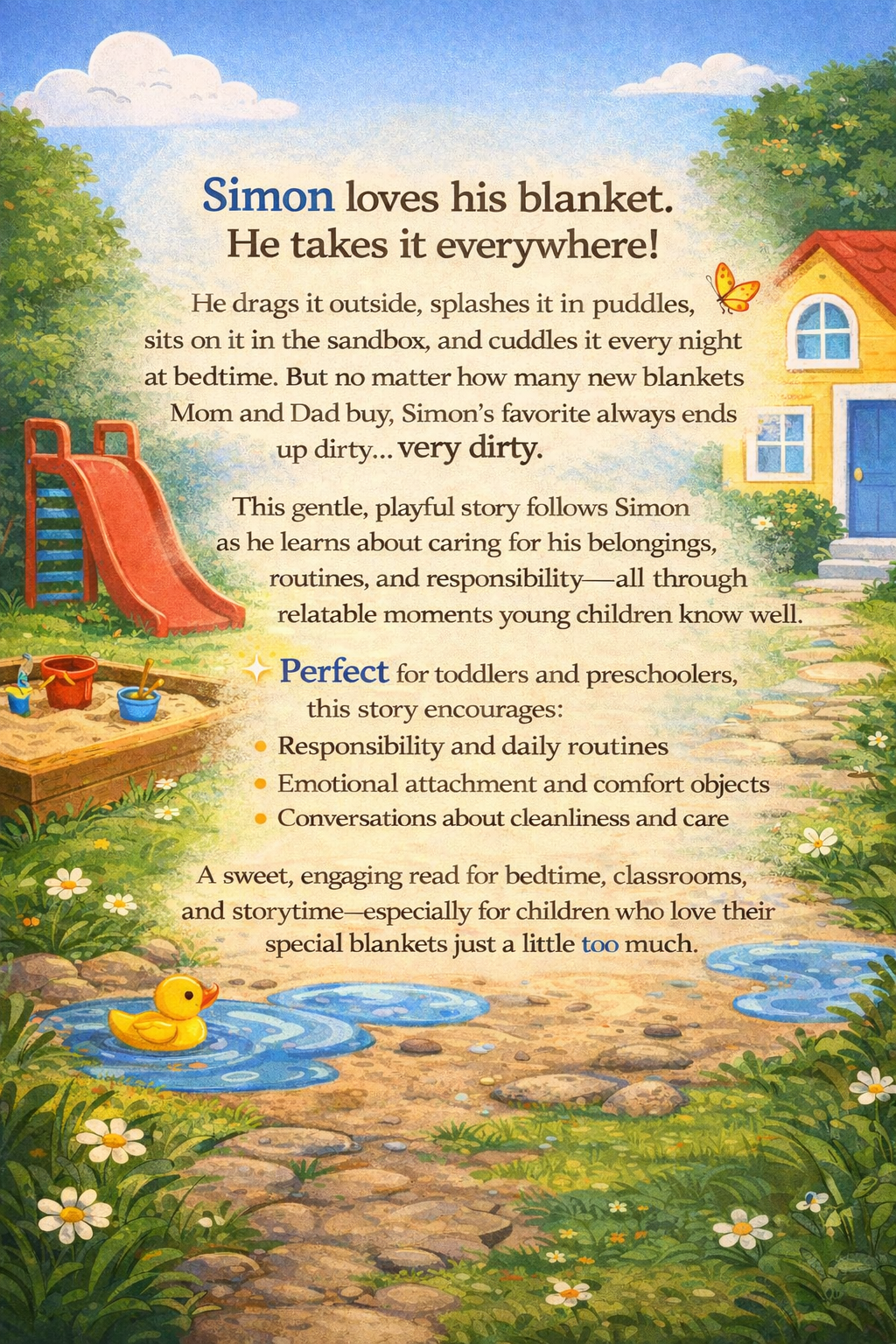 Image 3 of 3
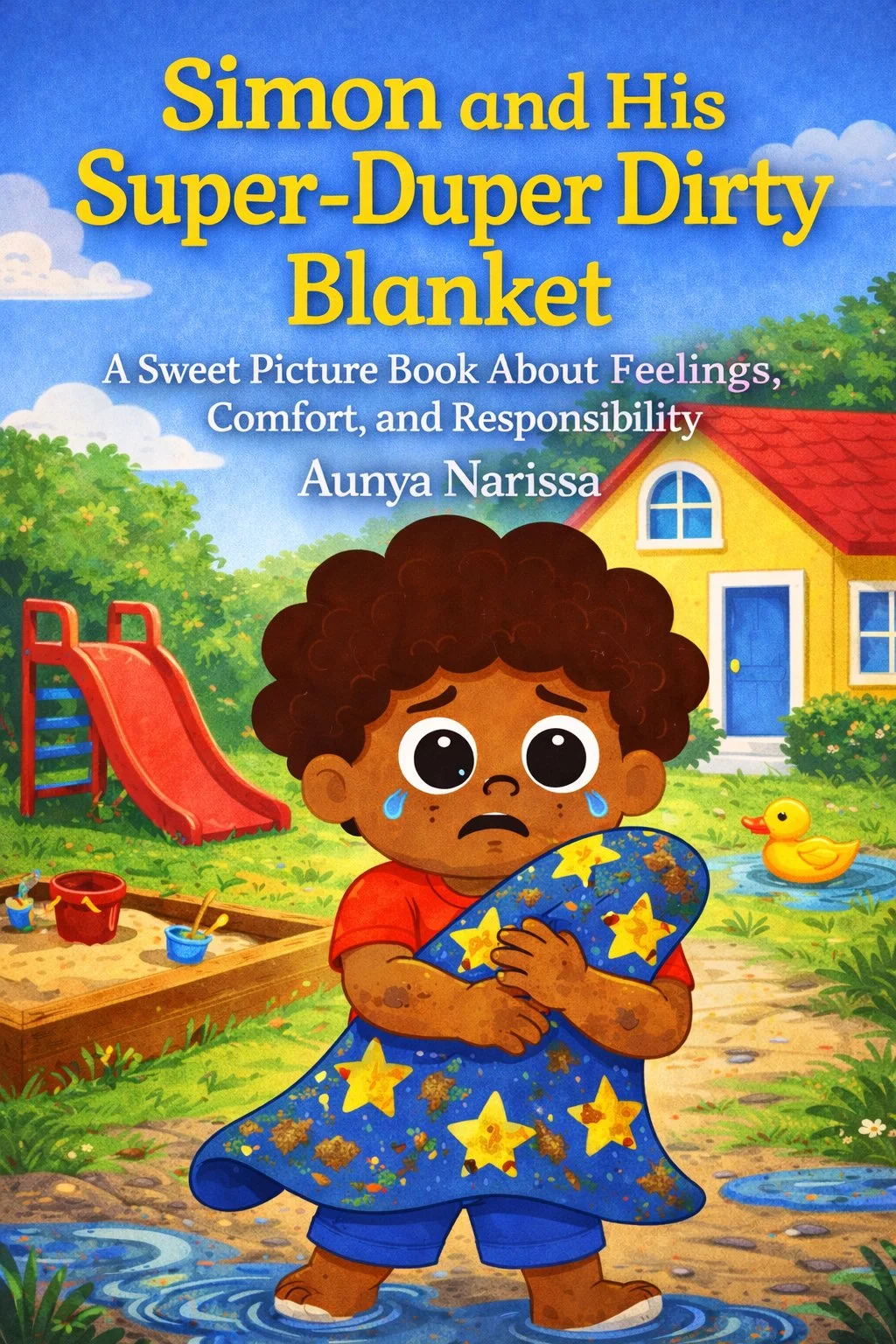
Simon and His Super-Duper Dirty Blanket is a heartwarming children’s picture book about feelings, responsibility, and the special comfort objects kids love most.
When Simon refuses to wash his favorite blanket, he must learn that caring for the things we love is part of growing up. This social-emotional learning (SEL) story gently teaches responsibility, attachment, and healthy habits in a way young readers understand.
Perfect for toddlers, preschoolers, and early elementary children who struggle with letting go of favorite items.
Children become attached to security blankets because they provide comfort, emotional safety, and consistency. These comfort objects help toddlers and preschoolers self-soothe during stress, bedtime, or transitions. Attachment to a favorite blanket is a normal part of early childhood development.
Most children naturally outgrow security blankets between ages 3 and 6. However, emotional readiness matters more than age. Forcing separation too early can increase anxiety. Gradual transitions supported by parenting tools and picture books are often more effective.
Start slowly. Limit the blanket to bedtime, wash it together to build responsibility, and introduce backup comfort routines. Reading a parenting support picture book about comfort objects can help children understand the change in a safe and relatable way.
A well-loved blanket is not harmful emotionally, but hygiene matters. Teaching children how to care for their favorite comfort object builds responsibility while respecting their attachment. Balance emotional support with healthy habits.
If a child cannot function socially, attend school, or self-soothe without the object, additional support may help. Most attachments are healthy and temporary, but persistent distress may benefit from gentle parenting strategies.
Simon and His Super-Duper Dirty Blanket is a parenting support picture book that helps toddlers and preschoolers understand feelings, attachment, and responsibility in a reassuring and age-appropriate way.
Simon and His Super-Duper Dirty Blanket is a heartwarming children’s picture book about feelings, responsibility, and the special comfort objects kids love most.
When Simon refuses to wash his favorite blanket, he must learn that caring for the things we love is part of growing up. This social-emotional learning (SEL) story gently teaches responsibility, attachment, and healthy habits in a way young readers understand.
Perfect for toddlers, preschoolers, and early elementary children who struggle with letting go of favorite items.
Children become attached to security blankets because they provide comfort, emotional safety, and consistency. These comfort objects help toddlers and preschoolers self-soothe during stress, bedtime, or transitions. Attachment to a favorite blanket is a normal part of early childhood development.
Most children naturally outgrow security blankets between ages 3 and 6. However, emotional readiness matters more than age. Forcing separation too early can increase anxiety. Gradual transitions supported by parenting tools and picture books are often more effective.
Start slowly. Limit the blanket to bedtime, wash it together to build responsibility, and introduce backup comfort routines. Reading a parenting support picture book about comfort objects can help children understand the change in a safe and relatable way.
A well-loved blanket is not harmful emotionally, but hygiene matters. Teaching children how to care for their favorite comfort object builds responsibility while respecting their attachment. Balance emotional support with healthy habits.
If a child cannot function socially, attend school, or self-soothe without the object, additional support may help. Most attachments are healthy and temporary, but persistent distress may benefit from gentle parenting strategies.
Simon and His Super-Duper Dirty Blanket is a parenting support picture book that helps toddlers and preschoolers understand feelings, attachment, and responsibility in a reassuring and age-appropriate way.